






























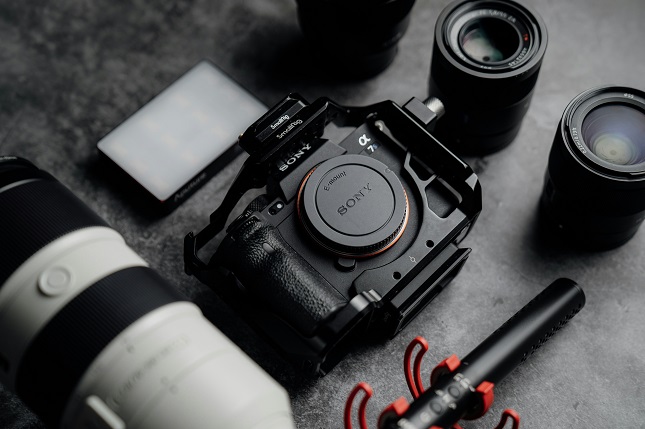
Ever saved up, bought a shiny new camera, and still felt like… something’s off? The footage looks fine. Sharp, even. But not better.
Not the jump that was expected after all that research, all that money, all those late nights watching gear reviews.
That feeling creeps in slowly. Maybe it’s the lighting. Maybe it’s the settings. Maybe it’s just… you?
Truth is, upgrading camera gear is rarely the fix people think it is. A lot gets ignored in the process. Small and boring things. The kind nobody brags about in YouTube titles. But those are usually the things that make or break the result.
Let’s get into it.
The Lens Matters More Than the Body (Even If That Hurts to Admit)
It’s easy to get caught up in camera bodies.
- New sensor.
- Better autofocus.
Fancy specs that sound impressive in comparison charts. But then the same old lens gets slapped on it. And suddenly, that “upgrade” feels underwhelming.
Spending big on a camera and realizing the lens is holding everything back. That moment when footage looks soft, or flat, or just… lifeless. And no amount of tweaking fixes it.
A solid lens doesn’t just improve quality. It changes how things feel.
- Background blur looks smoother.
- Subjects pop more.
- Colors feel richer without extra editing.
Storage Isn’t Just Storage (It Quietly Controls Everything)
This one gets ignored way too often.
Memory cards don’t seem exciting. They’re small. Cheap compared to everything else. Easy to grab at the last minute. But then things start going wrong.
- Dropped frames.
- Recording stops.
- Files get corrupted.
- The camera lags when it shouldn’t.
That’s when reality hits.
Choosing an SD card for camera performance isn’t just about capacity. It’s about speed. Write speed, especially. High-resolution video, slow motion, and RAW bursts—they all demand more than a basic card can handle.
And the worst part? The camera won’t always warn you clearly. It just… struggles.
There’s something really annoying about losing a perfect shot because the card couldn’t keep up. No redo. No second chance. Just gone.
So yeah, storage feels like a small detail until it ruins something important.
Audio Still Gets Treated Like an Afterthought
Great visuals with bad audio feel… wrong.
It’s one of those things people don’t notice immediately, but they feel it. The experience just doesn’t sit right. And yet, audio often gets ignored during upgrades.
Built-in mics are used. Wind noise sneaks in. Echo makes everything sound distant. Dialogue becomes hard to follow.
Then frustration builds.
Because fixing audio later is way harder than fixing visuals. Sometimes impossible. A simple external microphone can change everything. Even a basic one. Cleaner sound. Clear voices. Less background chaos. And suddenly, the content feels more professional. More watchable. More real. It’s strange how something so “invisible” can carry so much weight.
Lighting Gets Blamed Last (But It’s Usually the Problem)
When footage doesn’t look right, the first instinct is to tweak camera settings.
ISO goes up. Aperture changes. White balance gets adjusted over and over.
Still looks off.
Because lighting wasn’t right to begin with, bad lighting makes even the best camera struggle. Shadows fall in weird places. Skin tones look unnatural. Details get lost.
And yeah, natural light helps, but it’s not always reliable.
- It changes.
- It disappears.
- It refuses to cooperate when needed most.
That’s where even simple lighting setups help.
- A soft light.
- A reflector.
Something to control the scene instead of chasing it. It doesn’t have to be expensive. Just intentional. Because once lighting is handled properly, everything else suddenly feels easier. Cleaner. More predictable.
Workflow Becomes the Hidden Bottleneck
Upgrading gear often means bigger files.
- Higher resolution.
- Higher bitrate.
- More data everywhere.
Sounds great—until it hits the editing stage.
Suddenly, the computer slows down. Files take forever to transfer. Editing feels laggy and frustrating.
That excitement from the new gear fades quickly.
Because now, there’s a new problem. Workflow matters more than expected. Storage drives, editing software, even the way files are organized—it all plays a role. If that system isn’t ready, the upgrade becomes a headache.
And no one talks about this enough.
People focus on shooting better, but forget that everything after shooting matters just as much. A smooth workflow saves time, energy, and sanity.
Expectations Get Too High, Too Fast
This one stings a bit. New gear creates big expectations. Better camera equals better content, right? Not always.
Because skill doesn’t upgrade automatically.
Framing and timing still matter. Understanding light, movement, storytelling—it all stays the same. And when results don’t match expectations, doubt creeps in.
Was the wrong camera chosen? Was it a waste of money? Should something else have been bought?
It’s easy to spiral. But usually, the issue isn’t the gear. It’s getting used to it and learning what it can do—figuring out its quirks.
That takes time.
There’s no shortcut for experience and no setting that replaces practice. And yeah, that realization can feel heavy after spending money. But it’s also freeing in a weird way. Because it means improvement is still in your control.
Thinking Down the Line
Upgrading camera gear feels like progress and exciting. But the truth is, the upgrade itself is only part of the story.
The lens, the storage, the audio, the lighting, the workflow, even expectations—these are the quiet pieces that shape the final result. Ignore them, and things feel off. Pay attention to them, and everything starts to click.
It’s not glamorous, it’s not flashy, but it works.
And sometimes, after a long day of trying to figure out why things aren’t coming together, that’s all that matters.